

Horsenettle
Scientific Name: Solanum carolinense
Weed Family: Solanaceae
Description
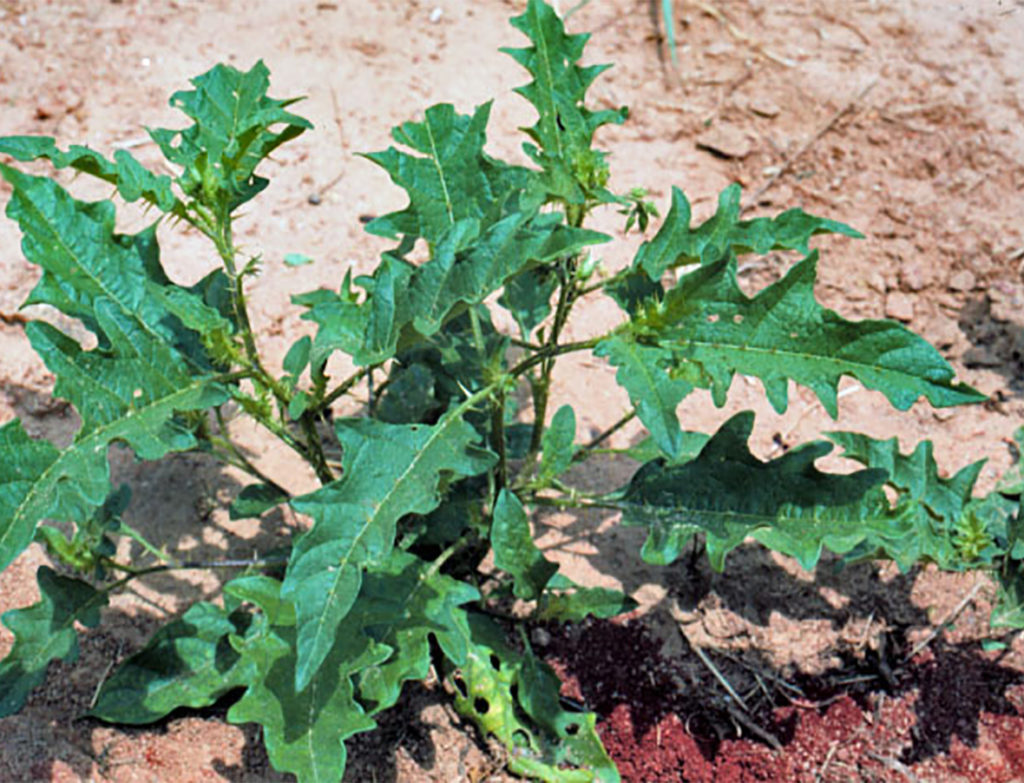
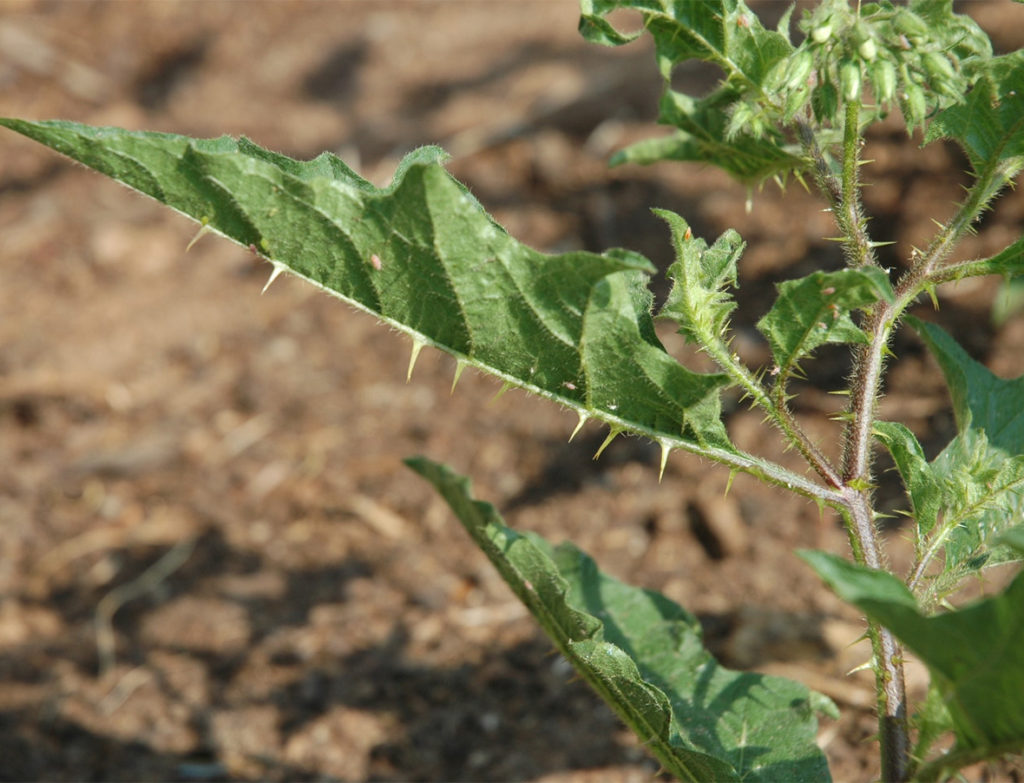
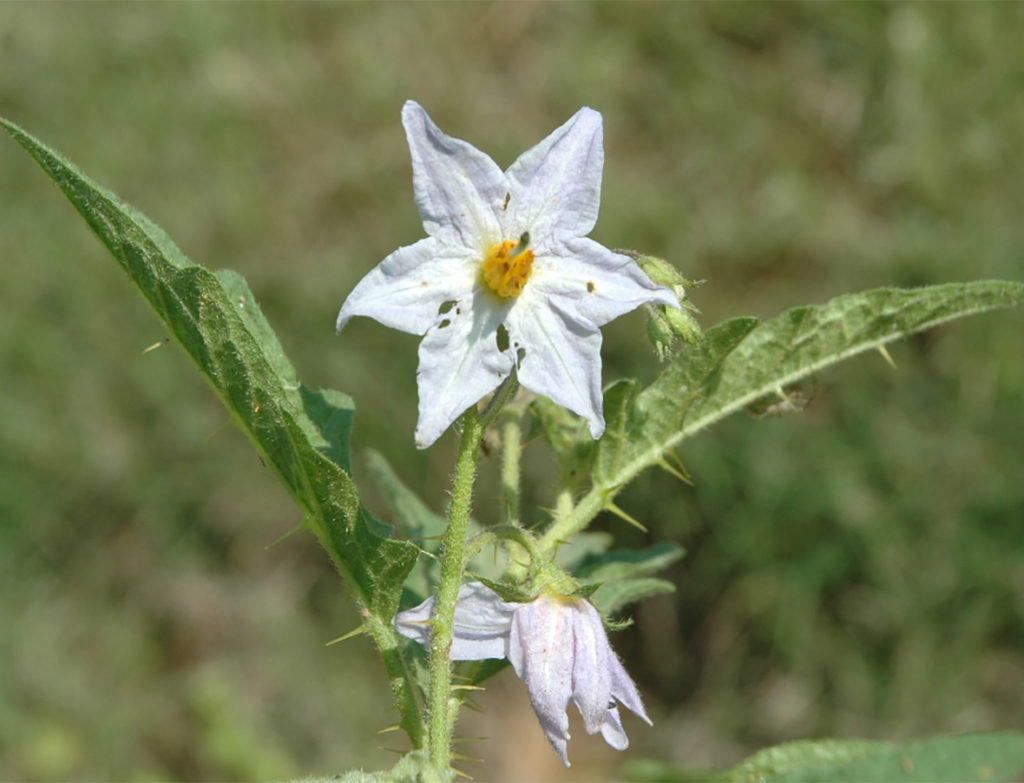
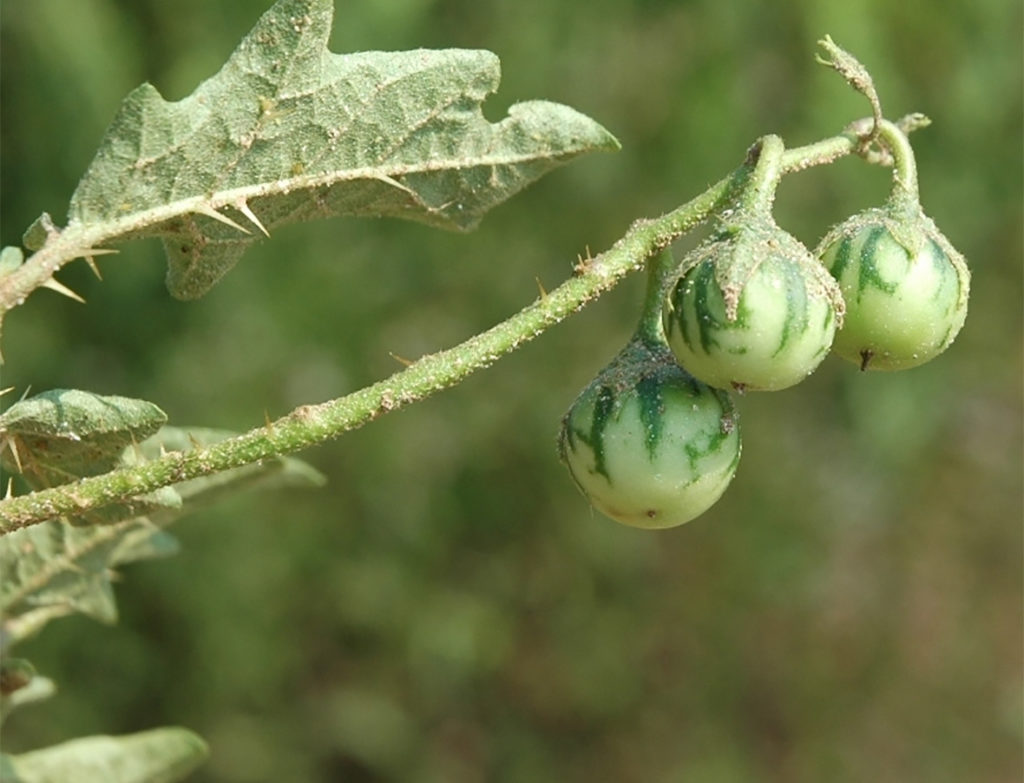
Horsenettle is an erect perennial weed. The leaves of horsenettle alternate on stems that contain spines. Horsenettle leaves range up to seven inches in length and 1- to 2-inches wide with wavy to coarsely lobed edges. The veins of the leaves as well as the petioles contain spines. Horsenettle spreads by rhizomes and seeds. The flowers of horsenettle are purple to white in color and occur in clusters on spiny flower-stalks. The anthers of the flower are yellow. Flowers occur during the summer. The fruit is smooth globe shaped; the size of a marble. Fruits are light green in color with green coloring, but turn yellow at maturity. Horsenettle is found in pastures, orchards and landscape beds. Horsenettle will grow in a variety of soil types, but does best in sand soils. Horsenettle is found in the eastern United States, west to Kansas and Texas.
Herbicide Use
Make your post-emergence herbicide application to horsenettle that is young and actively growing.
Distribution
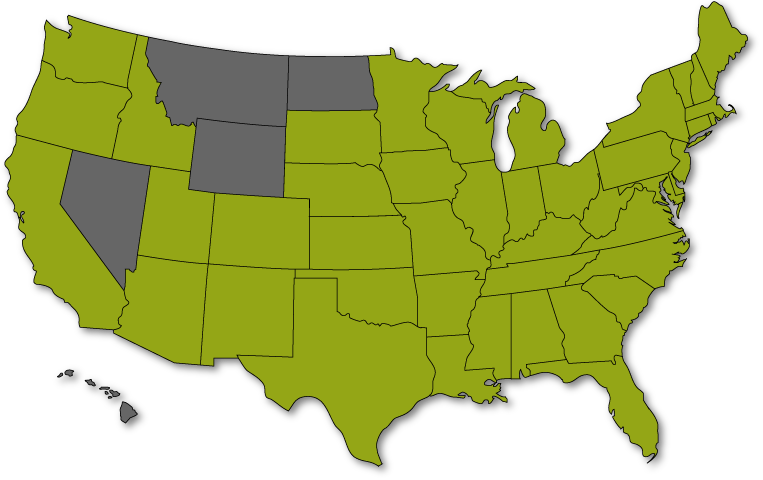
Germination Dates
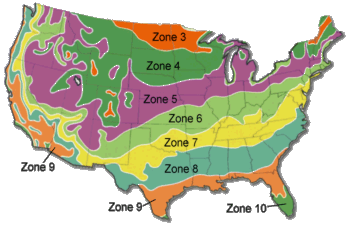
Zone-3: May-June
Zone-4: May
Zone-5: May
Zone-7: April
Zone-8: March
Zone-9: March
PBI-Gordon Product Recommendations