Dodder
Scientific Name: Cuscuta
Weed Family: Convolvulaceae
Description
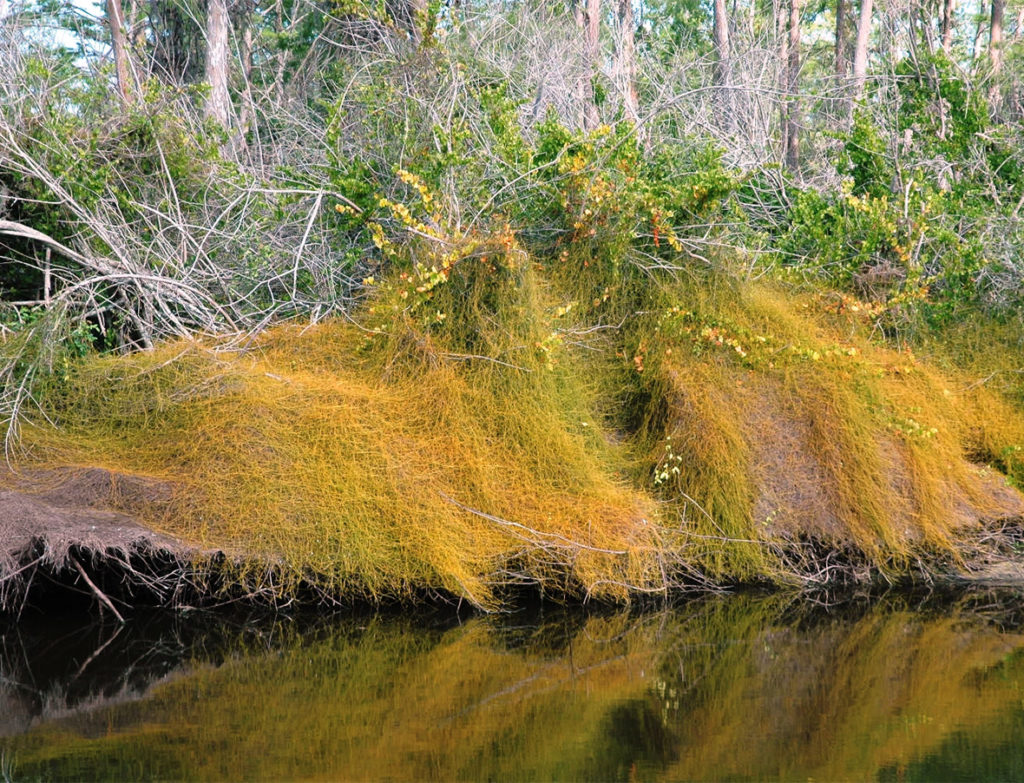
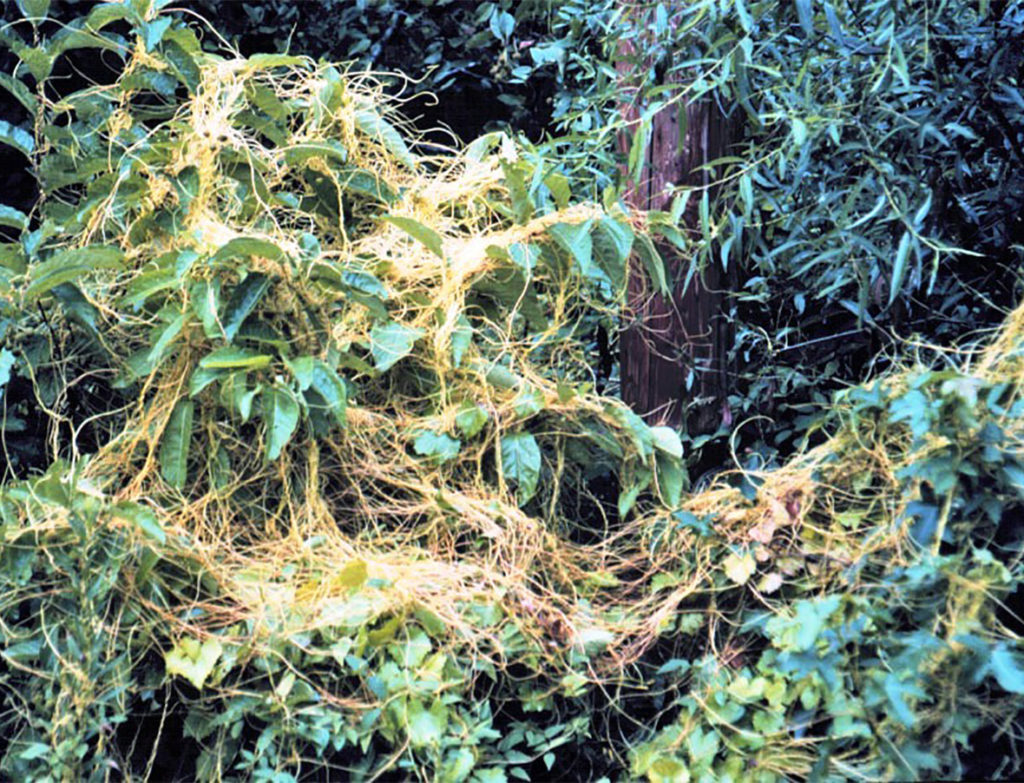
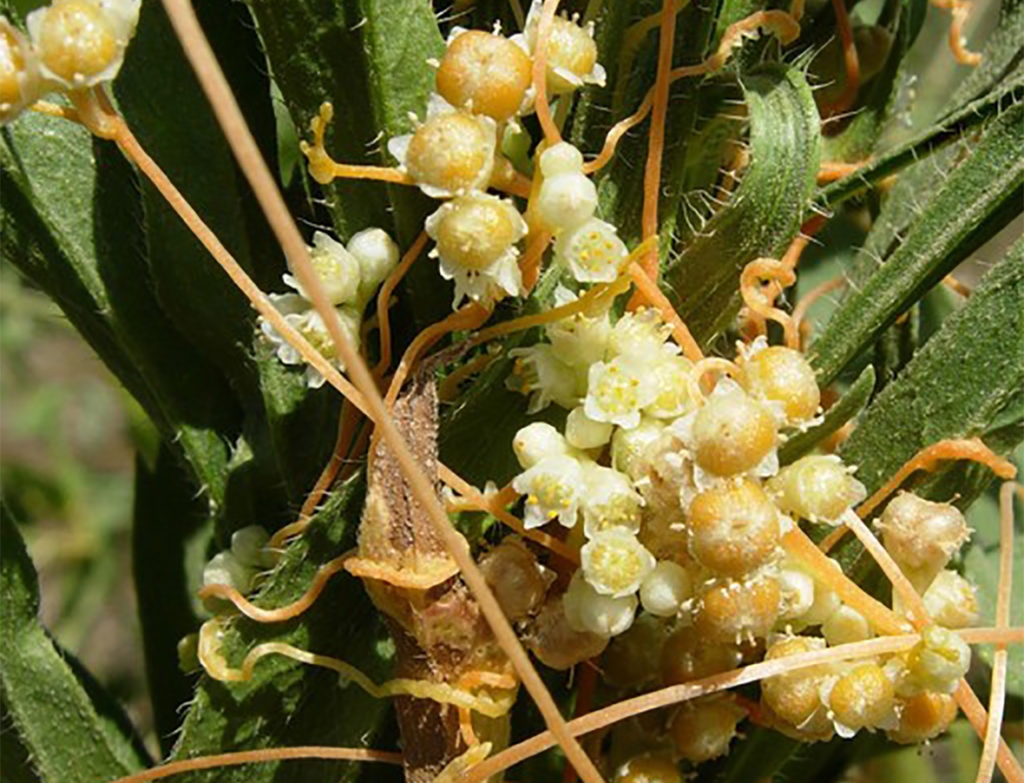
Dodder, an annual plant that consists of thin thread-like stems that are orange in color which attach to a host plant, belongs to the dodder (Cuscutaceae)family, which includes many species. At one time, dodder was classified in the morningglory family. Dodder is a true parasitic plant. Unlike other parasitic plants such as mistletoe, which have green leaves, only extract water and nutrients from host plants. Dodder has no leaves and must extract carbohydrates from the host plant.
Dodder produces small clusters of white to pink flowers in the early summer. Dodder spreads primarily by seeds which have the capability of surviving in the soil up to sixty years. When dodder seed germinates, establishment is dependent upon host plant availability. If a host plant is not within 1- to 3-inches of the initial germinating seed, the seedling will die. When the dodder seedling emerges, it develops a small ineffective root which can support the seedling for only a couple of days. Upon germination, the small dodder seedling sways around in search of the host plant. When a host plant is contacted, the dodder coils around the host in a counter-clockwise direction. Small sucking appendages called “haustoria” are produced that penetrate the host plant and extract food. Once the haustoria begin to extract food, the small initial root dies. Dodder can grow up to 3-inches per day and continually produces new haustoria to drain the host plant of nutrients. Dodder is found throughout North America.
Herbicide Use
Use of pre-emergence herbicides is the best chemical approach. These products must be applied prior to the germination of the seed as the small seedling root will drop off once the haustoria has formed. Dinitroanaline herbicides have been reported to be effective. Dichlobenil has also shown good results. Read all labels to ensure that the herbicides can be used around the host plants. Glyphosate has shown results as a postemergent herbicide, but its use is limited as it will also damage the host plant. Phenoxy herbicides have only shown limited control and again injury to the host plant can occur.
Distribution

Germination Dates
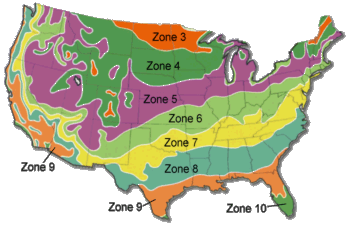
Zone-3: June
Zone-4: May-June
Zone-5: May-June
Zone-6: April-May
Zone-7: April-May
Zone-8: April
Zone-9: April
PBI-Gordon Product Recommendations