

Common Mullein
Scientific Name: Verbascum thapsus
Weed Family: Scrophulariaceae
Description
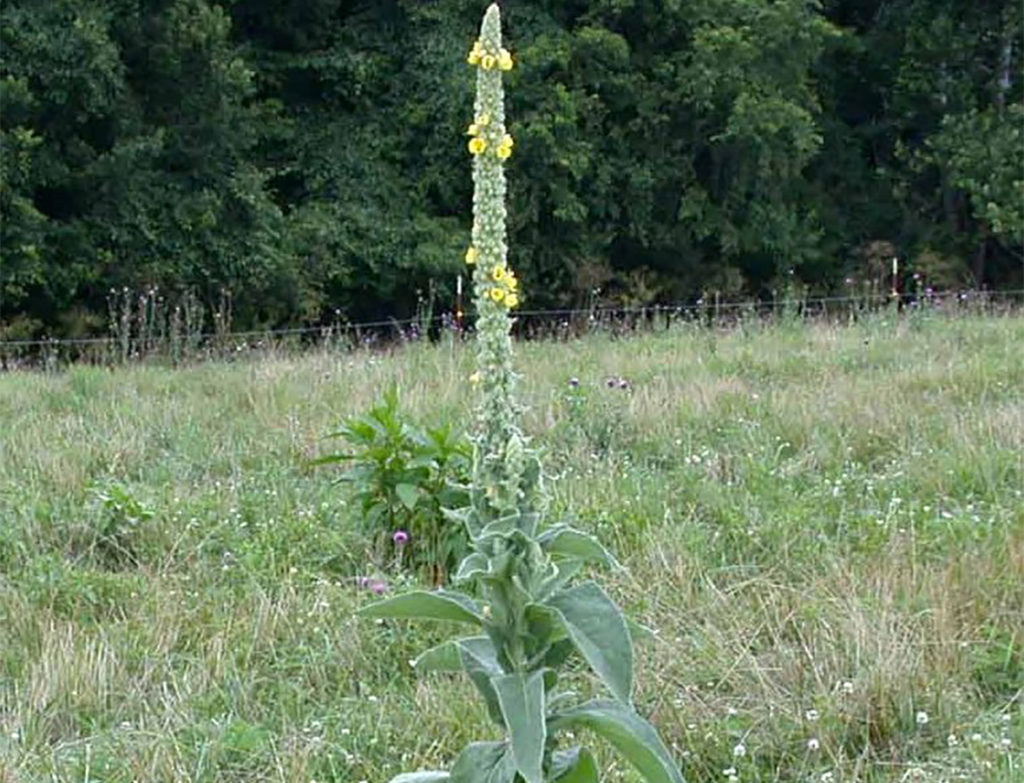
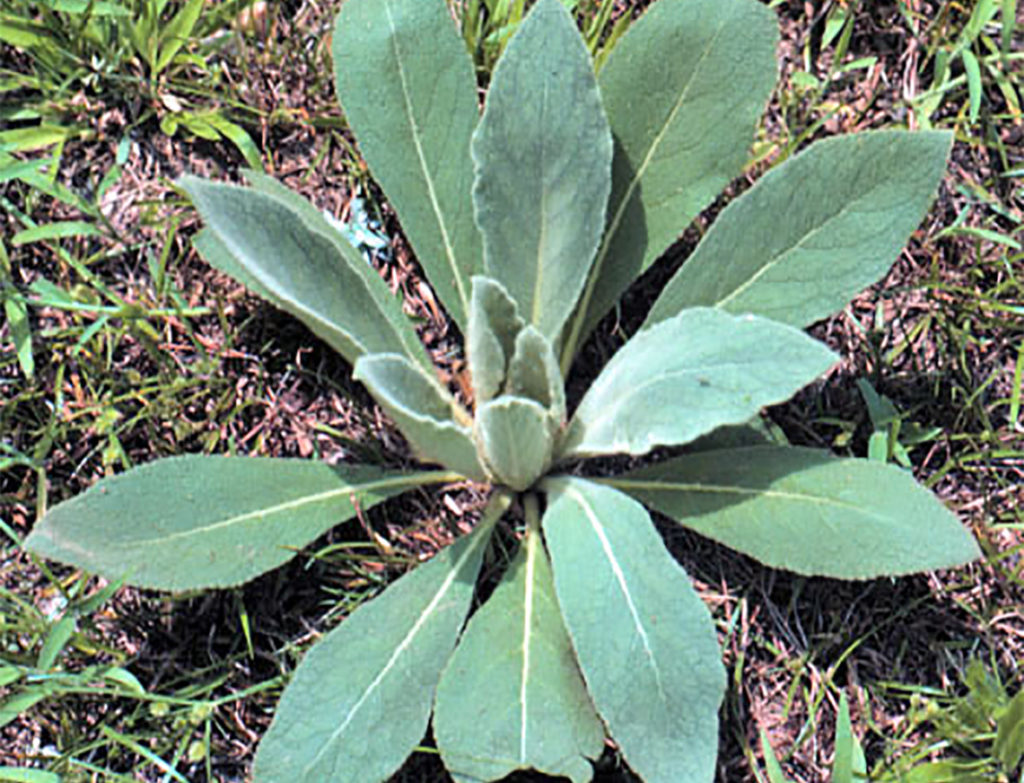
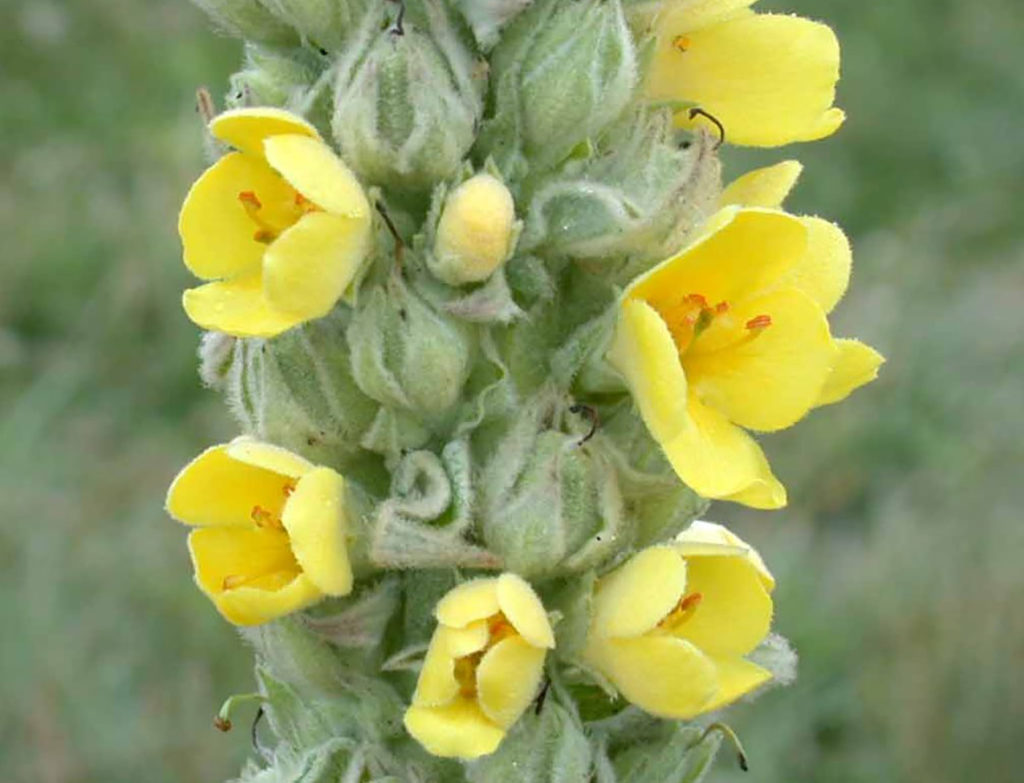
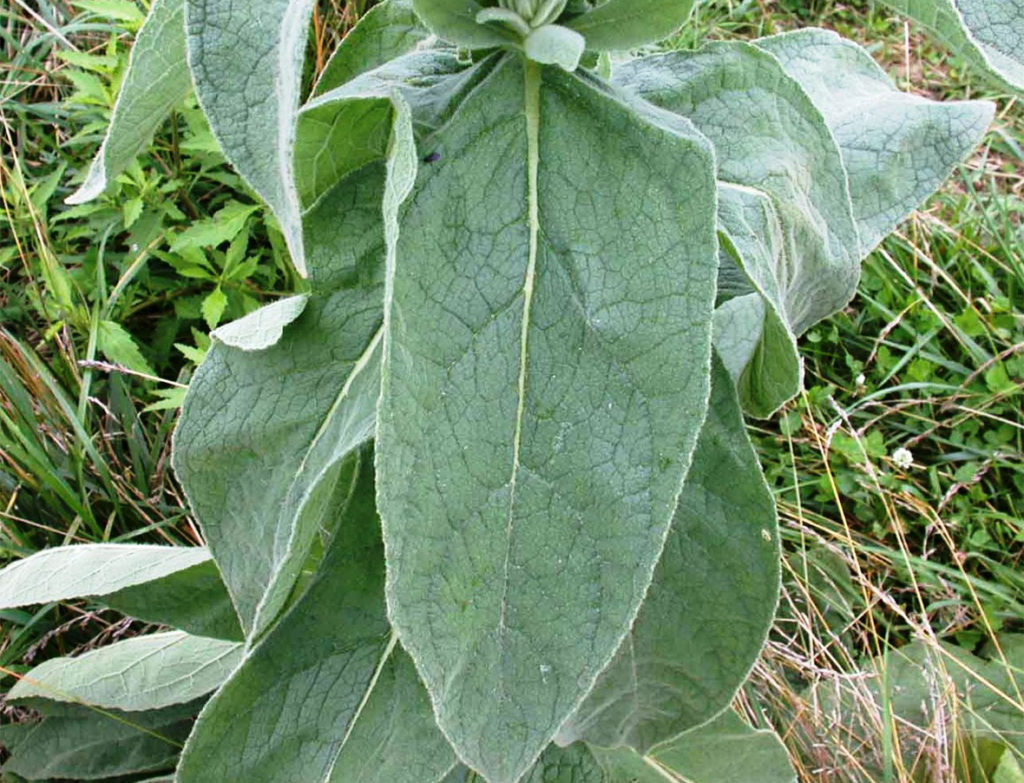
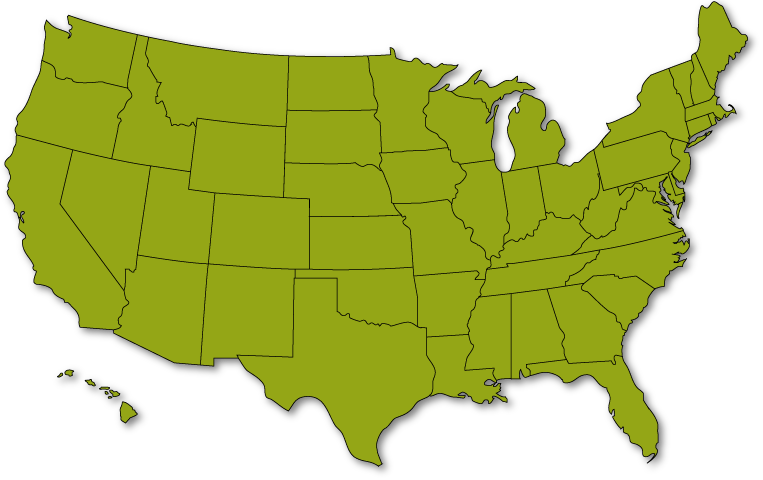
Common mullein, also called woolly mullein due to the grey hair that covers its leaves, is an erect biennial most commonly found in pastures and along roadsides. Common mullein will invade landscape beds. Common mullein grows to a height of three to six foot tall the second year, emerging from a basal rosette which forms from seed the first year. Leaves are elliptic to oblanceolate, covered with gray woolly hair and spiral alternately around an un-branched stem, decreasing in size near the top. Common mullein has a fleshy taproot. The five-petalled flowers of common mullein can be yellow or white. Flowers emerge near the top of the plant where they are crowded along the stalk. Fruit form from October to March in ovoid capsules which split in half to release several seeds. Common mullein spreads from seed. Originally from Europe, common mullein has naturalized in North America and is found throughout the United States and southern Canada.
Herbicide Use
Common mullein may be prevented with the use of a pre-emergence herbicide labeled for use in ornamental landscape beds. If using a post-emergence herbicide, best control will be obtained when mullein is young and actively growing, preferably while still in the first year rosette stage.
Distribution
Germination Dates
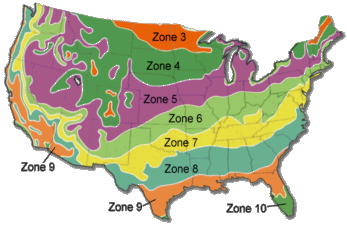
Zone-3: May-June
Zone-4: April-May
Zone-5: April-May
Zone-6: March-April
Zone-7: March-April
Zone-8: February-March
Zone-9: February-March
PBI-Gordon Product Recommendations